
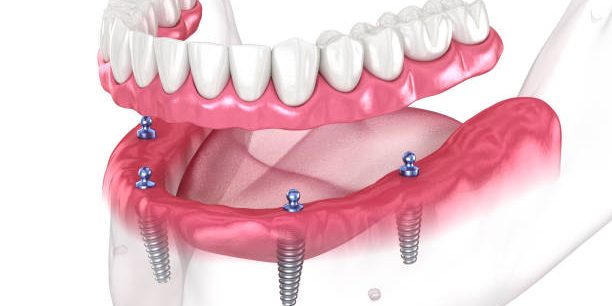
Living with missing teeth or uncomfortable dentures can significantly impact your quality of life. The All-on-4 dental implants technique has transformed full-arch tooth replacement, offering a solution that combines innovation with efficiency.
What is All-on-4? Understanding the Technique
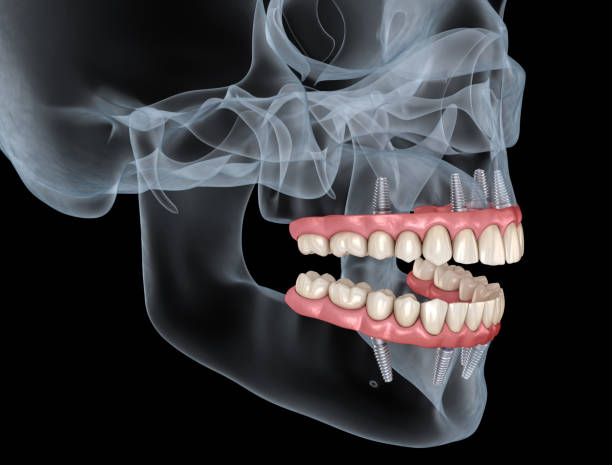 All on 4 replaces an entire arch of teeth using four strategically placed dental implants, literally “all teeth on four implants.” Two straight implants are placed in the front where bone density is higher, while two posterior implants are angled at 30-45 degrees. This angulation avoids the maxillary sinus (upper jaw) and mental nerve (lower jaw) while maximising bone contact.
Unlike conventional approaches requiring eight or more implants and bone grafting, All-on-4 dental implants utilise denser anterior bone. The angled implants emerge around the second premolar, allowing the prosthesis to cantilever backwards and support 10-14 teeth on just four implants.
The Science Behind All-on-4
While the All-on-4 name was coined in 2003 by Portuguese dentist Dr Paulo Malo working with Nobel Biocare, the technique evolved from decades of research. It builds upon Dr Per-Ingvar Brånemark’s 1960s discovery of osseointegration, titanium’s ability to integrate with bone, and consolidates innovations including using four implants for full-arch support (documented since 1977), angling posterior implants (since 1990), and immediate loading (since 1990).
The All-on-4 Procedure: Your Step-by-Step Journey
Understanding each phase of the All-on-4 procedure helps you feel prepared and confident. From initial consultation through final prosthesis placement, here’s your complete treatment journey.
Step 1: Comprehensive Assessment
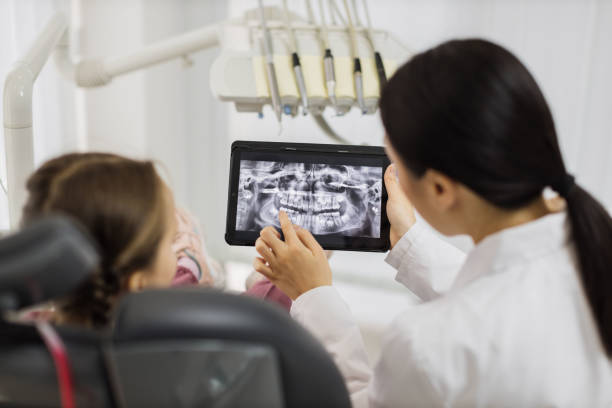
Your All on 4 expert uses Cone Beam Computed Tomography (CBCT), the most accurate bone assessment method. This 3D imaging reveals bone density, volume, and anatomical structures, determining precise implant positioning, prosthetic design, and your suitability for immediate loading. Not every patient qualifies; uncontrolled diabetes, heavy smoking, active gum disease, or insufficient bone may require alternative approaches.
Step 2: Surgery Day—Precision Placement
Surgery takes three to four hours per arch under local anaesthetic or sedation:
Surgical Process: The All on 4 dentist creates planned surgical sites, extracts failing teeth if needed, then positions four titanium implants, two anterior placed vertically, two posterior angled (30-45 degrees) to maximise bone engagement while avoiding sinuses (upper) or nerves (lower).
This strategic angled positioning eliminates the need for bone grafting or sinus lifts in many cases.
Abutment and Provisional Teeth: Multi-unit abutments connect to implants, and a temporary fixed bridge is typically attached within 24 hours. Immediate loading is possible because the angled configuration creates strong initial stability.
Step 3: Osseointegration—Bone Integration
Over three to six months, osseointegration occurs as the jawbone grows into contact with titanium implant surfaces. Your temporary acrylic prosthesis allows normal eating and speaking while you follow dietary guidelines, attend monitoring appointments, and maintain meticulous hygiene. Smoking must be avoided as it compromises healing.
Step 4: Final Prosthesis Options
Once osseointegration completes, you receive your definitive prosthesis:
Acrylic/PMMA: Acrylic teeth over titanium bar. More affordable with shock-absorbing properties reducing implant stress, but requires periodic replacement.
Zirconia: Milled zirconia framework and teeth. Exceptional strength, durability, and aesthetics. Its translucency creates natural light transmission for realistic appearance, considered a long-term investment.
Hybrid (All-on-Bar): Milled titanium substructure with acrylic or zirconia teeth. Protects implants even if teeth fracture, as the titanium bar keeps implants unified.
Your All on 4 expert discusses which option suits your clinical needs, aesthetic goals, and budget.
Step 5: Long-Term Care
Success depends on daily hygiene using soft brushes, interdental brushes, and water flossers, plus professional check-ups every six months with specialised implant cleaning. Peri-implantitis, inflammation and bone loss from bacterial plaque, is the primary long-term concern, making prevention through excellent hygiene essential.
Read More: All on 4 Recovery Time and Tips: What They Don’t Tell You About Post-Surgery Care
Risks and Realistic Outcomes
Potential complications include infection, implant failure (influenced by smoking, diabetes, bone quality), nerve injury, prosthesis issues (fracture, screw loosening), and peri-implantitis. When performed by experienced All on 4 experts on suitable candidates, research shows favourable outcomes, though individual results vary based on hygiene compliance, smoking, health status, and bone quality.
Why Sydney Implant Studio?
Sydney Implant Studio specialises exclusively in dental implant treatment. Dr Theo Spyrakis brings over 15 years of focused expertise, Malo Clinic training, and performs 550+ procedures annually with advanced technology and personalised care.
Dr Theo Spyrakis—All on 4 Expert: Trained at the Malo Clinic in Portugal with Dr Paulo Malo (developer of All-on-4), over 15 years in implant dentistry, decade+ performing All-on-4, approximately 550 implant procedures annually.
Technology: CBCT imaging, digital treatment planning, computer-guided surgery for precise implant positioning.
Comprehensive Care: Honest candidacy assessment, sedation options, quality implant systems from reputable manufacturers.
Is All-on-4 Right for You?
This procedure may suit those with significant tooth loss, failing teeth, uncomfortable dentures, adequate anterior bone density, good general health, and commitment to maintenance. Individual assessment by an experienced All on 4 dentist is essential.
Schedule a consultation with Dr Theo Spyrakis at Sydney Implant Studio: 02 9186 3885.
Important Disclaimers
Surgical Risks: Any surgical or invasive procedure carries risks. Before proceeding, you should seek a second opinion from an appropriately qualified health practitioner.
Individual Variability: Treatment outcomes vary significantly between patients. Success depends on bone quality, overall health, oral hygiene practices, smoking status, and adherence to post-operative instructions.
AHPRA Registration: Dr Theo Spyrakis is a registered dental practitioner with AHPRA.